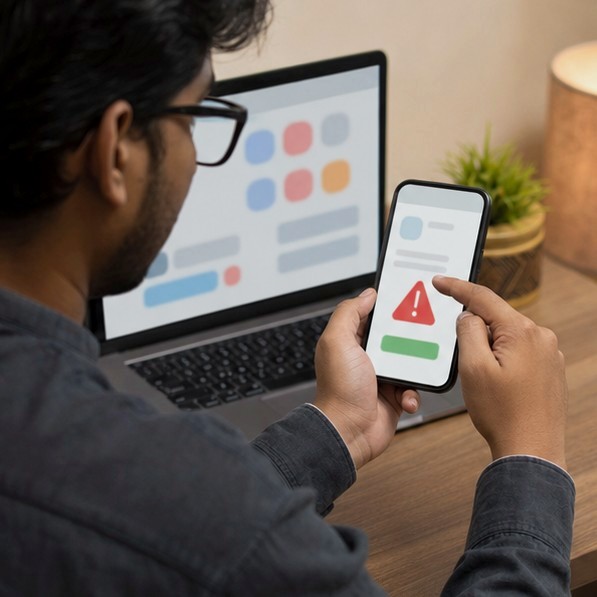
RedotPay Bangladesh Bank crypto rules
RedotPay Bangladesh Bank crypto rules
Regulatory-risk searches need a cautious Bangladesh-specific page that separates app checks from virtual-asset assumptions. Stay away from fake apps and OTP-sharing requests.

Bangladesh checklist
RedotPay Bangladesh Bank crypto rules
Regulatory-risk searches need a cautious Bangladesh-specific page that separates app checks from virtual-asset assumptions. Stay away from fake apps and OTP-sharing requests.
- For this safety question, verify app source, publisher and link origin before login or KYC.
- Check fake-app signs, OTP privacy, BDT risk and support route before acting.
- Check the official source before creating an account; for RedotPay Bangladesh Bank crypto rules, keep OTP, password, full card details and KYC files out of helper chats.
Guide
RedotPay Bangladesh Bank crypto rules: what to check first
For safety pages, verify the app source, protect OTP and KYC files, and avoid shortcuts that move the account outside official control.
Regulatory-risk searches need a cautious Bangladesh-specific page that separates app checks from virtual-asset assumptions.
- Verify app source, fake-app signals, OTP privacy and claim quality before acting.
- Verify source and account safety before trusting any offer, agent or shortcut.
- Stay away from fake apps and OTP-sharing requests. Fake app, OTP sharing and easy-profit claims are the main red flags.
Checks
Bangladesh Bank Crypto Rules: checklist before action
Confirm the app source before login, KYC, card fee payment or any request for OTP.
If the next step involves login, KYC or payment, verify app source and reject OTP-sharing requests.
- Check app source before login, KYC or payment.
- Protect OTP, password, full card details and document files.
- If a helper asks for login or KYC files, stop. Stop if anyone asks for OTP, password or document scans.
Checks
Bangladesh Bank Crypto Rules: app-screen checks
If an offer promises easy approval, cheap unlocks or profit from account access, treat it as a warning sign and use the official source checklist first.
Keep safety decisions tied to app source, OTP privacy, KYC file control and fake-agent signals.
- Verify source: Use official sources and stop if anyone asks for OTP, login or KYC files.
- Avoid APK links, Telegram sellers and fixed-profit claims.
- Save suspicious links or screenshots only if they help you report or avoid the risk.
Checks
Read Bangladesh Bank notices before choosing a funding route
Bangladesh Bank's foreign-exchange circular and related public warnings treat virtual assets as a restricted, high-risk area. This page does not convert app availability into legal permission. A RedotPay feature, an exchange listing or a P2P advertisement can be technically visible while the Bangladesh regulatory position still requires caution.
Use the original Bangladesh Bank PDF as the primary source and treat news reports as secondary summaries. Record the circular date, issuing department and scope before making a statement. Do not market bKash, Nagad, Rocket or a local bank transfer as an approved crypto rail merely because a seller accepts it.
- Primary source: Bangladesh Bank FE Circular No. 24.
- Separate technical availability from legal or regulatory status.
- Avoid claims of approval, guaranteed legality or protected recovery.
- Seek qualified local advice when the current rule affects a transaction decision.
Checks
বাংলা short summary
Official app source না দেখে login, KYC বা card fee payment করবেন না।
APK link, Telegram helper বা unlock promise দেখলে আগে safety checklist দেখুন।
- Official app screen আগে দেখুন।
- BDT total এবং fee clear না হলে payment করবেন না।
- OTP, password বা KYC file share করবেন না।
Checks
Bangladesh Bank Crypto Rules: decision path
Safety pages should stop risky behavior early. Start with download source, then compare app source, publisher, link origin and account-security signs.
A cheap offer, APK link or easy-approval claim is not a support route. Check the official source before creating an account.
Protect OTP, login, full card details and KYC documents. If a helper needs those, the answer is to stop, not to negotiate.
Return to the official source before opening a card, deposit or support flow. If a helper asks for login or KYC files, stop.
- Check official app source before login.
- Avoid APK links and easy-approval claims.
- Never share OTP, password or KYC files.
- Return to the safety guide if a helper asks for control.
Checks
Bangladesh Bank and virtual asset caution
Bangladesh users should treat crypto funding and P2P routes as a regulatory-risk area, not as a normal local wallet payment. Public Bangladesh Bank and BFIU-related notices have warned users to refrain from virtual currency or virtual asset dealings, and the local position can change.
This guide does not give legal advice. Before using USDT, USDC, P2P, cash-out or exchange routes, check current Bangladesh rules, RedotPay app availability, exchange records, network, TXID and support evidence. If the route depends on a middleman, OTP sharing or unclear wallet receipts, stop.
- Do not describe bKash, Nagad or Rocket as direct RedotPay rails unless the official app shows a route.
- Keep exchange receipts, wallet receipts and RedotPay screenshots separate.
- Save network, address, TXID, amount and timestamp for any crypto transfer.
- Pause when legal, exchange or app-screen details are unclear.
Checks
Bangladesh Bank Crypto Rules: Bangladesh context
RedotPay Bangladesh Bank crypto rules should be checked from the live RedotPay app first, then matched with the Bangladesh context that matters most: app source, fake app signal, OTP privacy and control of KYC files.
For Bangladesh, this safety question often comes with local wallet habits, Facebook group screenshots, exchange-counter advice or partial YouTube instructions. Treat those as background only; the live app screen, BDT total and saved evidence decide the next step.
Use this account safety check to stop risky shortcuts before login, payment or document sharing. The fee, network or status shown in your own app session is the decision point; a copied screenshot is not enough proof before payment.
Checks
Bangladesh Bank Crypto Rules: records to keep
Safety checks should happen before login, KYC, card fee or deposit.
App source, publisher, APK risk, OTP privacy and fake support signals are the first things to verify.
Use official download sources and stop if anyone asks for OTP, password or KYC files. Avoid APK links, Telegram sellers and fixed-profit claims.
If a claim promises easy approval, cheap unlocks or account recovery through a chat helper, stop before sharing anything.
Risky shortcuts usually appear before the user pays. A Bangladesh user may see APK links, Telegram helpers or approval-shortcut posts, so app source, OTP privacy, KYC files and support route stay in one safety check.
For Bangladesh users, record the app source and link origin; close the route if it asks for OTP, password, full card data or KYC files.
Next, close any route that depends on OTP sharing, password sharing or KYC files outside the app.
- Check official app source.
- Avoid APK and approval-shortcut claims.
- Keep OTP and KYC files private.
- Stop when a helper asks for account control.
Quick table
Bangladesh Bank Crypto Rules: first checks
| Question | What to check | Safe next step |
|---|---|---|
| First check | Verify app source, link origin and account-safety boundaries before login or payment. | Check app source |
| Bangladesh cost or risk | Account security: Enable security settings and keep recovery details private. Check the official source before creating an account. | Stop if anyone asks for OTP, password or document scans. |
| Safety pause point | Pause if app source, link origin, OTP request or helper identity is unclear. | Check app source |
FAQ
Bangladesh Bank Crypto Rules: short answers
Fake apps and agents change tactics, so verify source and keep OTP and KYC files private.
RedotPay Bangladesh Bank crypto rules: How do I avoid fake RedotPay apps or agents?
For this safety question, use official sources, avoid APK links, and stop if anyone asks for OTP, password, full card data or KYC files.
What should I check first for RedotPay Bangladesh Bank crypto rules?
Avoid APK links, Telegram sellers and fixed-profit claims. Confirm fake app, scam, OTP, KYC privacy and official-source checks, app source, KYC, BDT cost and fake-support risk before moving money.
How do I avoid fake apps or agents?
Use the official site or app store, avoid APK links, and stop if anyone asks for OTP, password, full card number or KYC documents.
Sources checked
Official and local references
For Bangladesh Bank Crypto Rules, verify the official domain, app source and contact route before login, identity submission or recovery action.
Next step
Bangladesh Bank Crypto Rules source checked?
Check app source, then stop for OTP, login or KYC requests.